Kitchen drains
Kitchen sink clogs
A kitchen drain rarely blocks all at once. Fat from pans cools on the inside of the pipe, rice and coffee grounds stick to it, and one evening the water stops going down.
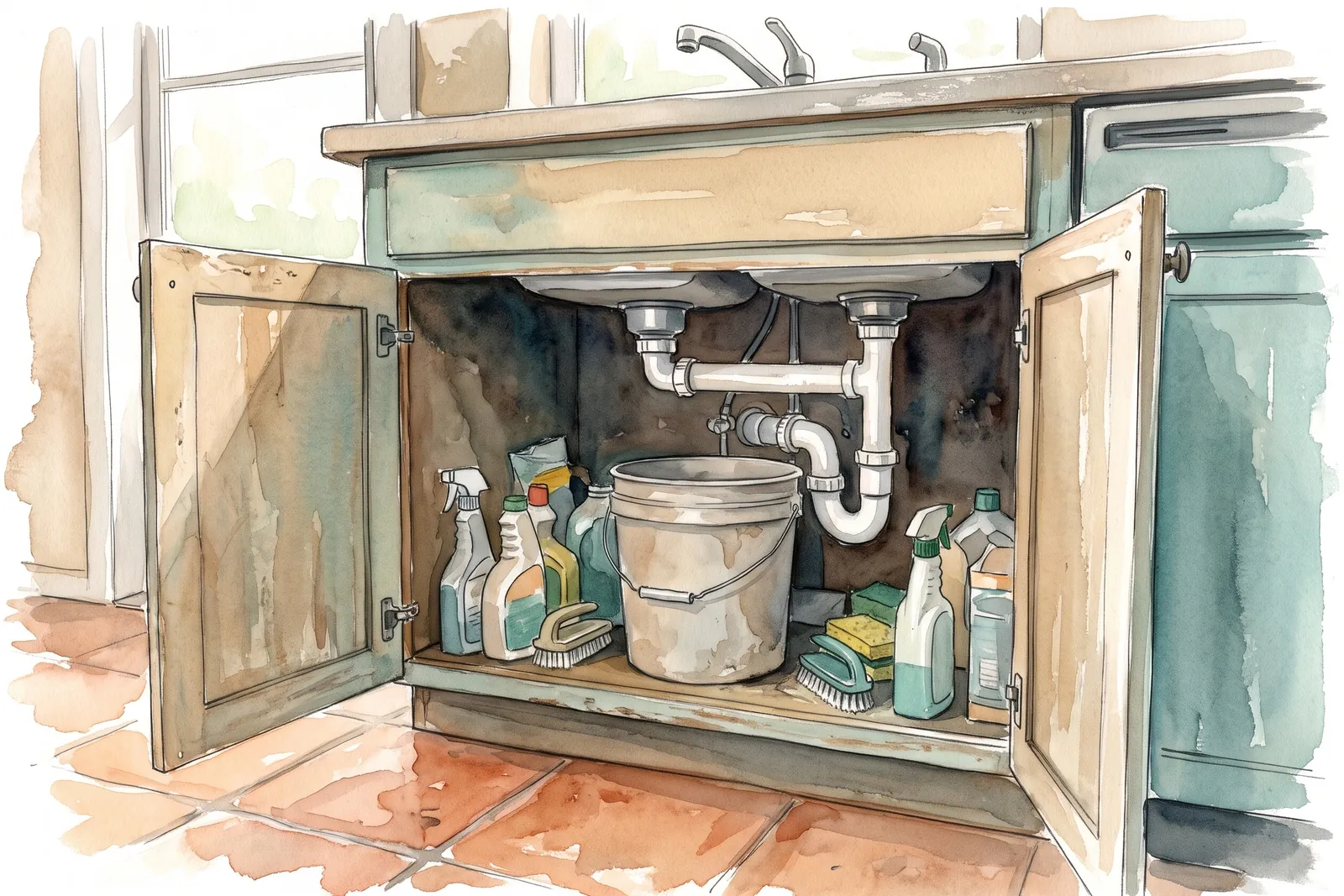
Where a kitchen clog usually sits
Most kitchen blockages are not in the trap you can see under the sink. They form a few feet further on, in the stretch of pipe inside the wall or under the slab, where warm dishwater slows down and the grease it carries cools and clings.
If the other side of a double sink fills when you run one side, the plug is past the point where the two bowls join. If the dishwasher leaves water in the sink, the same pipe is to blame, since the dishwasher drains through it too.
What to try before calling
Stop running the tap
More water only raises the level and pushes greasy water into the cabinet.
Leave the disposal off if it hums
A humming disposal is jammed. Switch it off at the wall or the breaker before you reach into it for anything.
Use a cup plunger with the other bowl sealed
On a double sink, hold a wet rag over the second drain, or the push escapes there instead of reaching the clog.
Skip the bottle of drain opener
If the sink is full, a caustic product just sits in the bowl and makes it dangerous for whoever opens the trap next. Why chemical openers cause trouble.
How a drain company usually clears it
The technician normally takes the trap off or uses the cleanout behind it, then runs a small cable machine into the wall pipe. A cable punches a hole through grease. It does not remove the layer still coating the pipe, which is why a sink cleared this way can slow down again within months.
When the same kitchen drain keeps closing up, ask about jetting the branch, which washes the grease off the walls rather than boring through it.
- Expect the cabinet to be emptied and a bucket placed under the trap.
- Ask where they went in: the trap, a wall cleanout or the roof vent.
- Ask whether the clog was grease, food or something solid, since that decides what you change at the sink.
Keeping the next one away
Wipe pans with a paper towel before they go in the sink and let cooking oil cool in a can. In unincorporated Hillsborough County you can take sealed cooled oil to a Cooking Oil Recycling Effort cabinet at libraries and parks and recreation centres. Rice, pasta, eggshells and coffee grounds belong in the bin, not the disposal. More on grease and the disposal.
Kitchen sink questions
Why does the dishwasher leave dirty water in the sink?
Both drain into the same pipe behind the cabinet. When that pipe narrows, the dishwasher's pump pushes its water back up into the sink bowl instead of past the blockage.
Is boiling water safe to pour down a slow kitchen drain?
It can soften fresh grease, but it can also loosen glued plastic joints and crack a porcelain sink. It moves the problem further down the pipe more often than it removes it.
A short call settles what happens next
Ask how they would reach the pipe, when they could come and how the visit is charged. If the answers don't suit you, hang up; nothing is booked.
Water still not going down?
Tell the company which drains are affected and whether water is coming up anywhere. You agree to nothing until you choose to.
Call (656) 206-4918Calls may be recorded. Read how referrals are paid for and the privacy policy.